How to Make Rosehip Jam: Step-by-Step Recipe
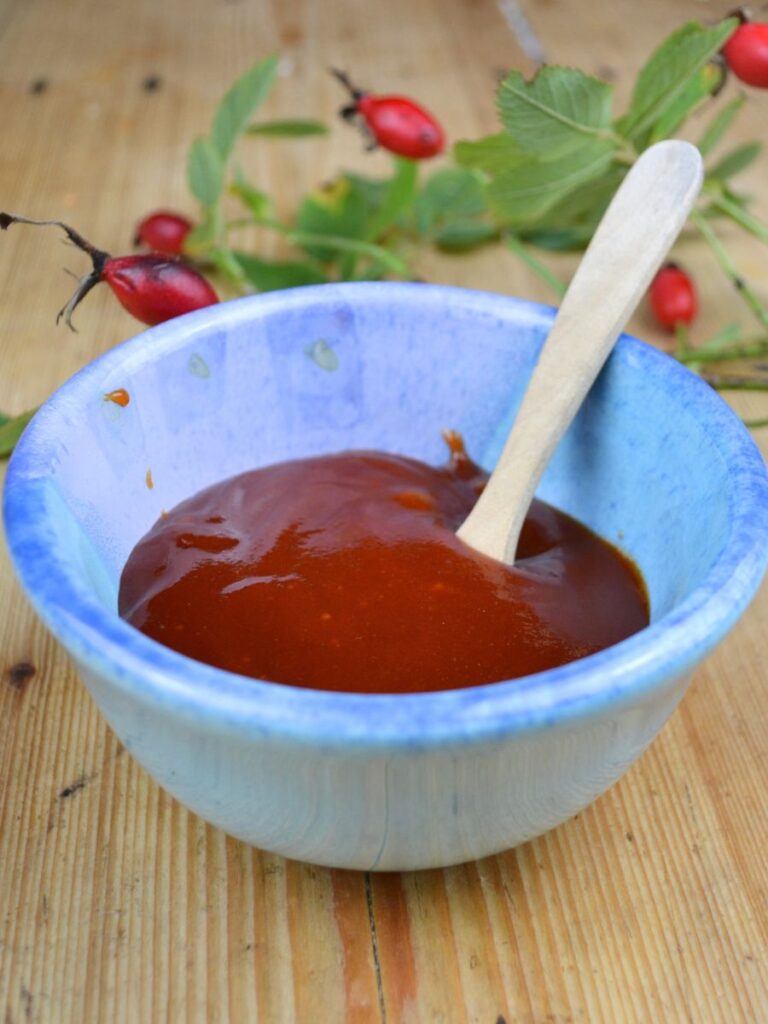
Making rosehip jam is a little more time-consuming than making most homemade jams, but the effort is truly worth it. From gathering the ripe rosehips to preparing and cooking them, there are a few extra steps involved, but the result is a beautiful, naturally fruity jam with a lovely colour and flavour.
Rosehip season is a wonderful time to slow down and make something from nature. If you have access to wild rosehips, collecting them can add to the joy of the process. This homemade rosehip jam is a delicious way to preserve some of the flavours of autumn and enjoy them throughout the colder months.
It is a lovely activity to do once a year with your children. They are great helpers. My children treasure this time of year. From spring, they watch the roses turn into fruit, then wait until it’s ready to be harvested for jam.
What are rosehips?
Rosehips are the bright red fruits that develop on wild roses after flowering. They usually appear in late summer and autumn and are easy to spot once the rose petals have fallen.
What you need:
- Fresh rosehips
- Water
- White granulated Sugar
- Lemon juice
- food mill
- thin colander
- cheesecloth or similar.
- A medium saucepan
- A large saucepan
- Wooden spoon
- A small cool plate
- Sterilised jam jars
For every 1 kilo of rosehip pulp, 800 grams of sugar and juice from 1/2 a lemon.
Food mill:
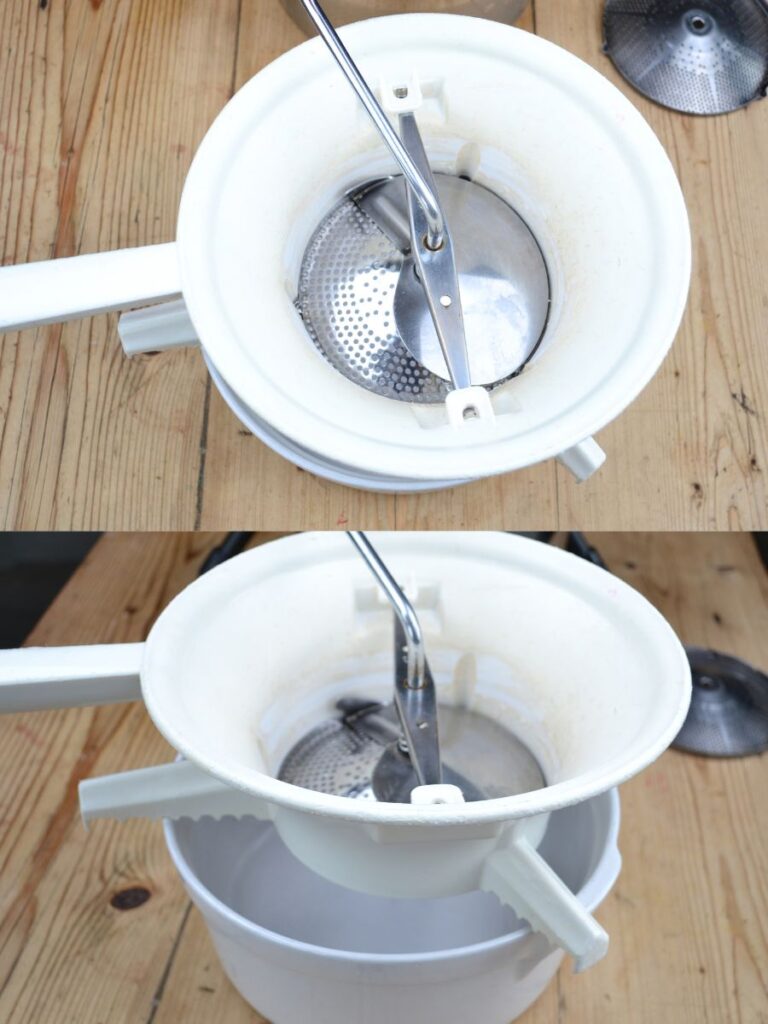
A food mill is a simple kitchen tool used to purée soft, cooked foods while separating out skins, seeds, and other unwanted pieces.
For rosehip jam, a food mill is particularly useful because rosehips contain small seeds and fine hairs that need to be removed. After cooking the rosehips until soft, you pass them through the food mill. The soft fruit is pushed through the small holes, while the seeds, skins, and hairs are left behind.
It looks a little like a bowl with a perforated bottom and a hand-operated turning blade inside. You simply add the cooked fruit and turn the handle.
If you don’t have a food mill, you can use a fine sieve, though it usually takes a bit more time and effort.
How to make the rosehip jam:
To use rosehips in cooking, you have to remove the seeds and fine hairs inside the fruit, as they can be irritating. That is why making rosehip jam requires a little more prep than many other fruit jams.
Harvest and preparation
Step 1:
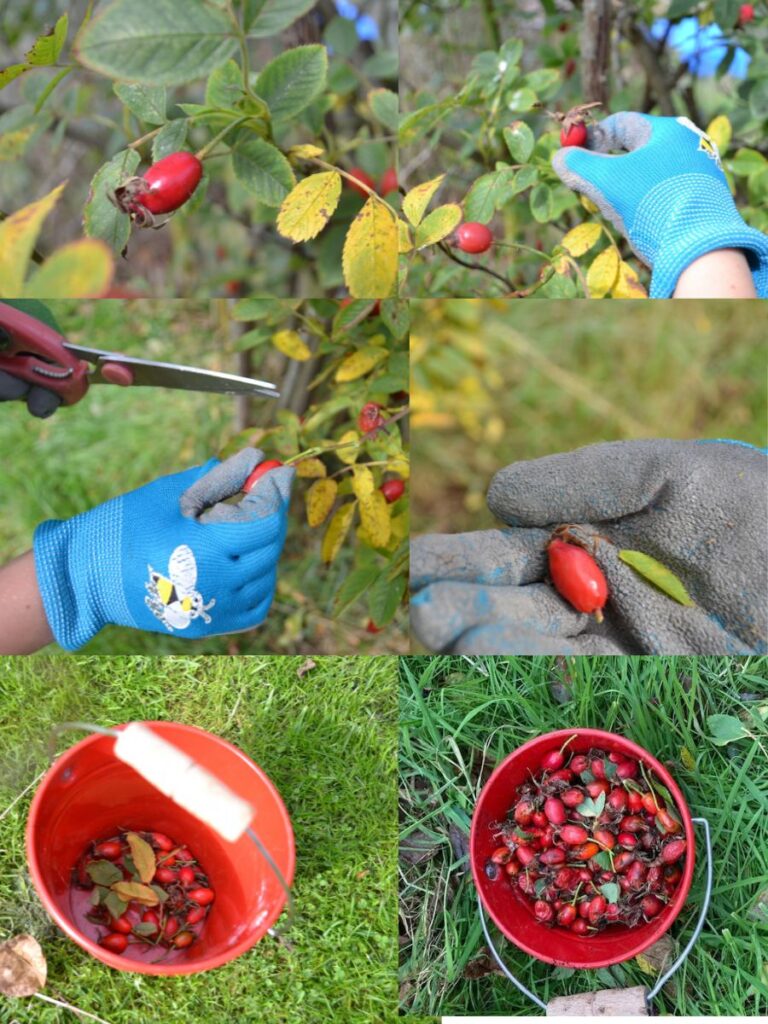
When picking rosehips, look for fruit that is bright red and ripe, not green or shrivelled.
Step 2:

Clean the rosehips by cutting off the ends and stems with a knife, and discard any bad fruit.
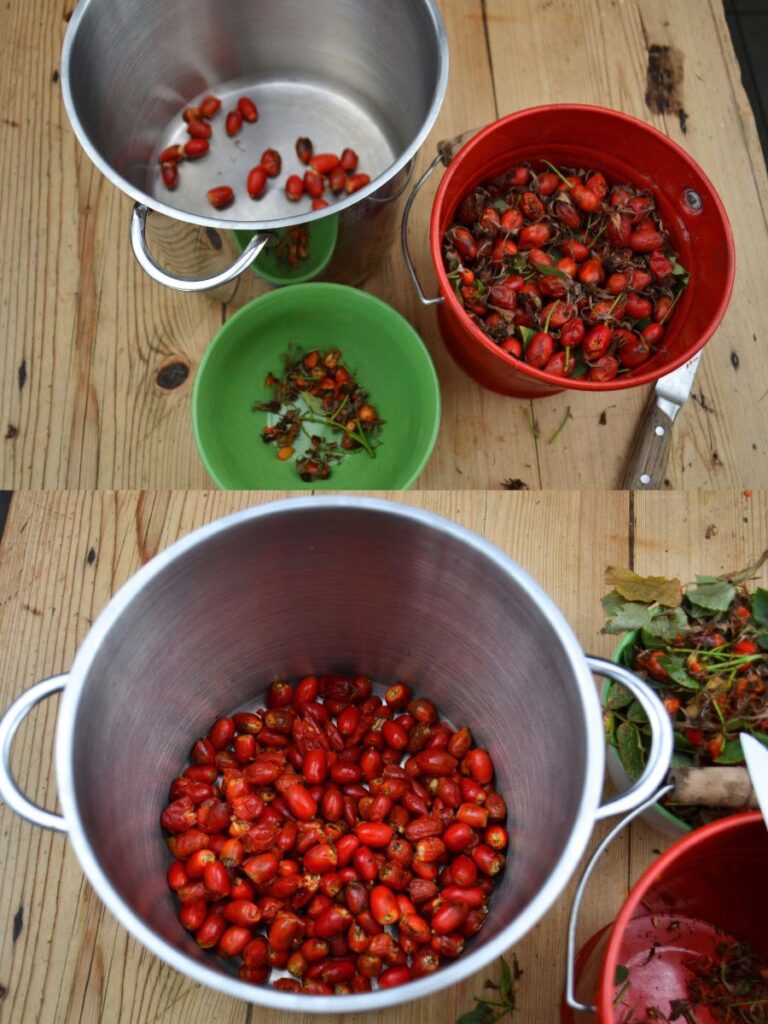
Put the rosehips in a big saucepan.
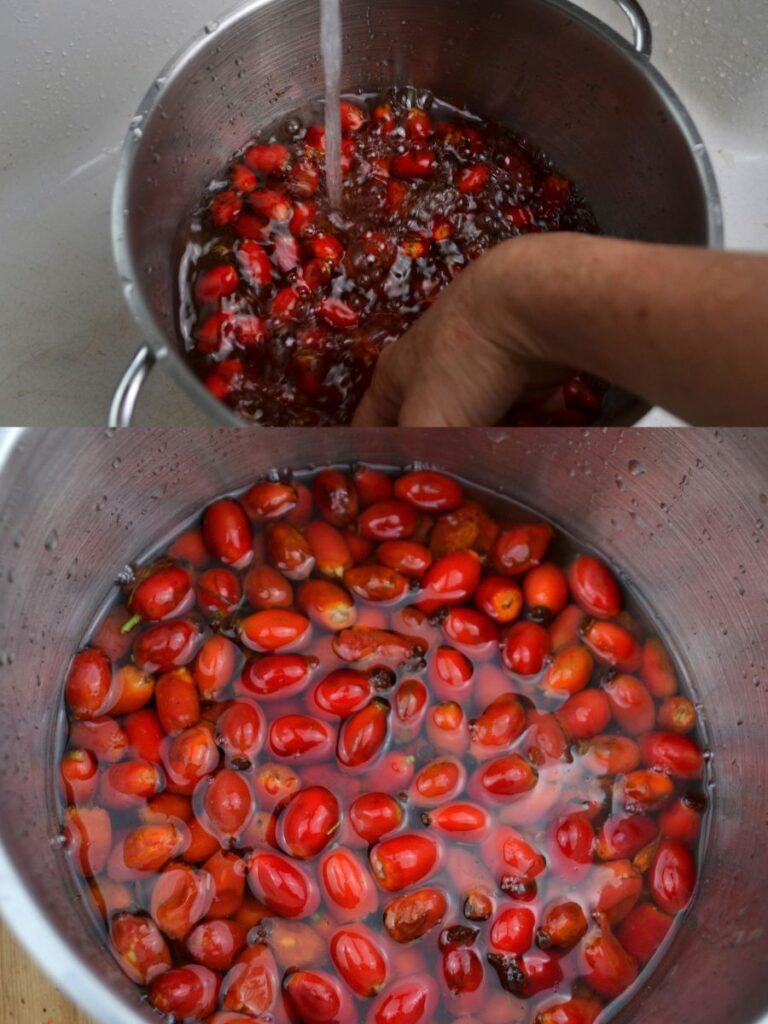
Wash the fruit, then fill the saucepan with water to cover it.
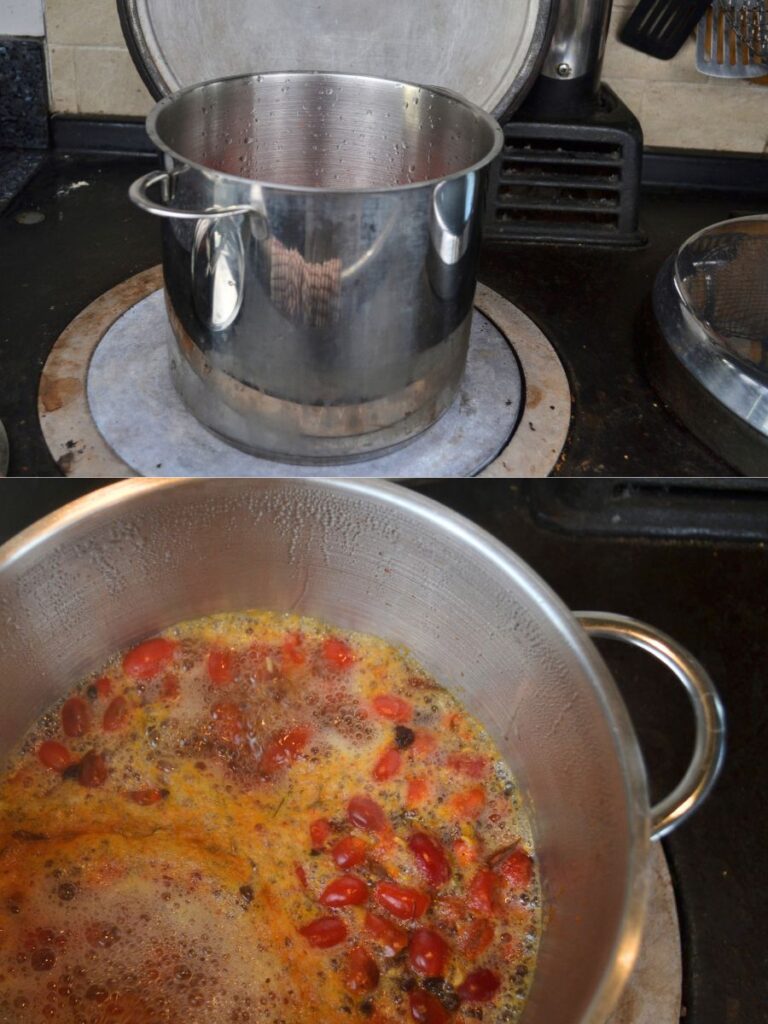
Cook for at least 1 hour, until the fruit is very soft.
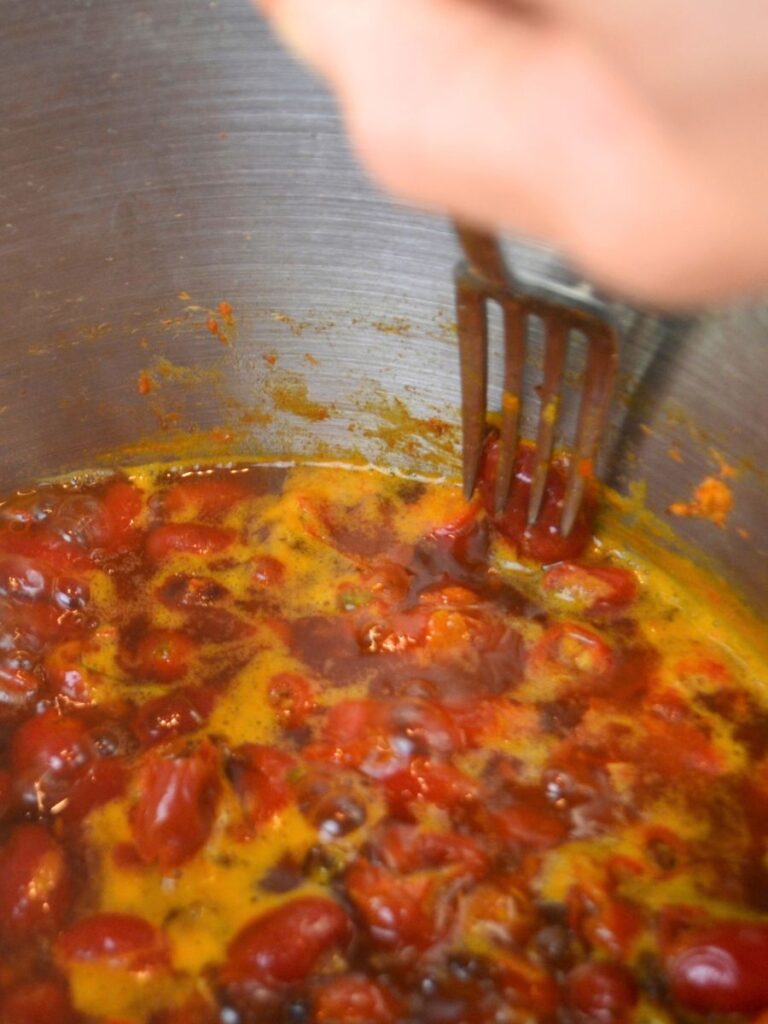
Try a fork or spoon against the side of the saucepan to check if they are soft; if they are hard, cook them a bit longer.
Processing the fruit:
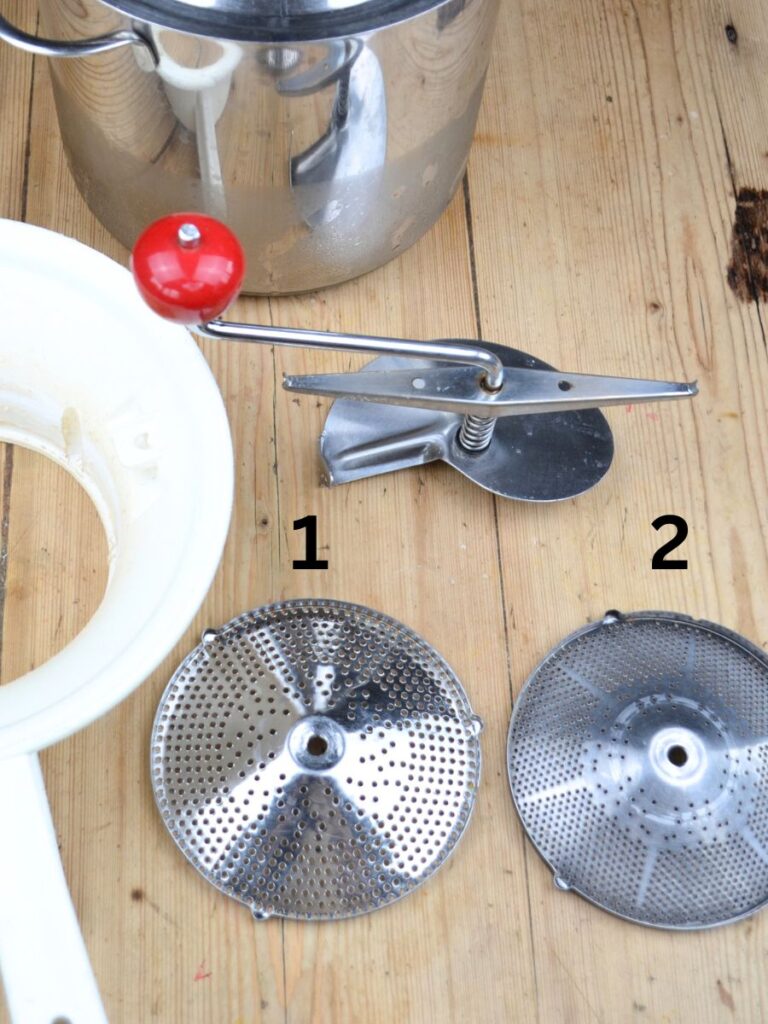
If you are using a food mill, pass the fruit through the larger holes twice and the smaller holes once.
Well, here’s where the hard work begins! Prepare the food mill if you are using one.
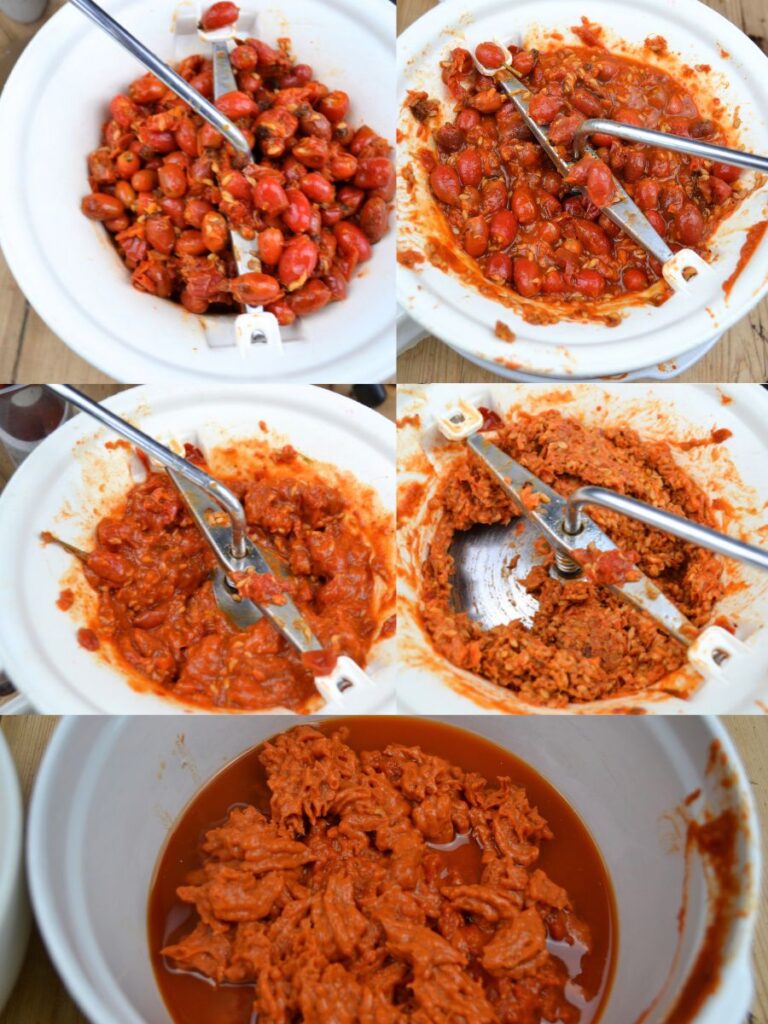
Add a small amount of the fruit at a time; it is easier to work with smaller batches.
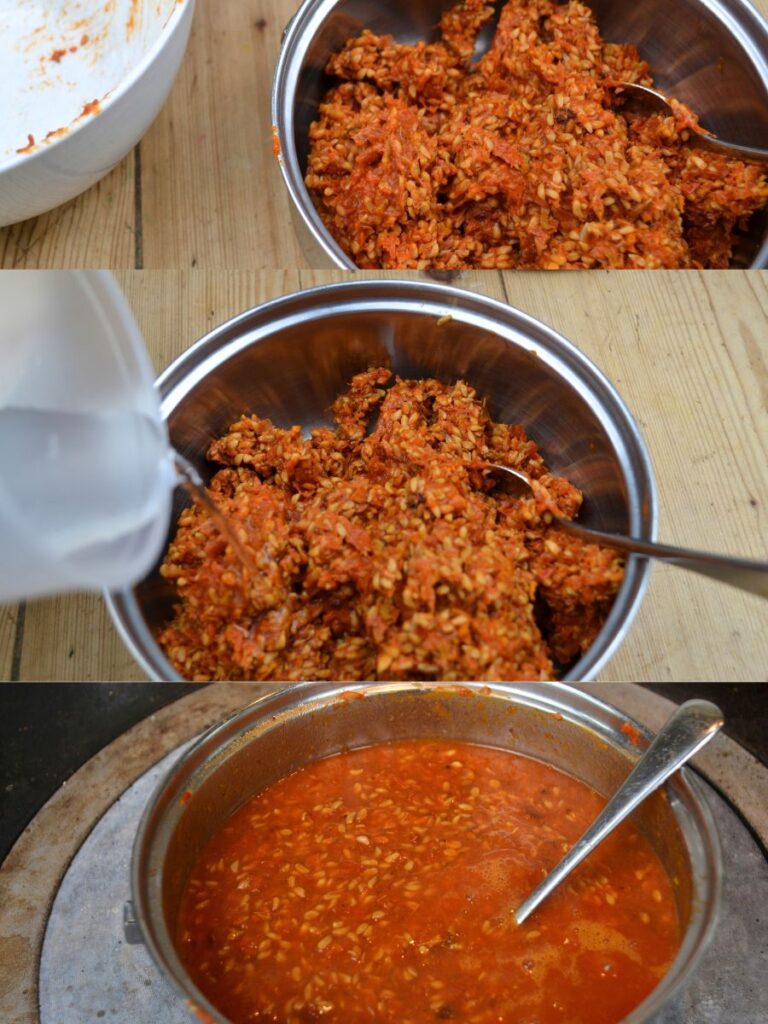
Once you’ve finished passing all the fruit, put the leftovers (the seeds and peels) in a saucepan with some water and cook them for a little while. This helps you extract as much juice as possible.
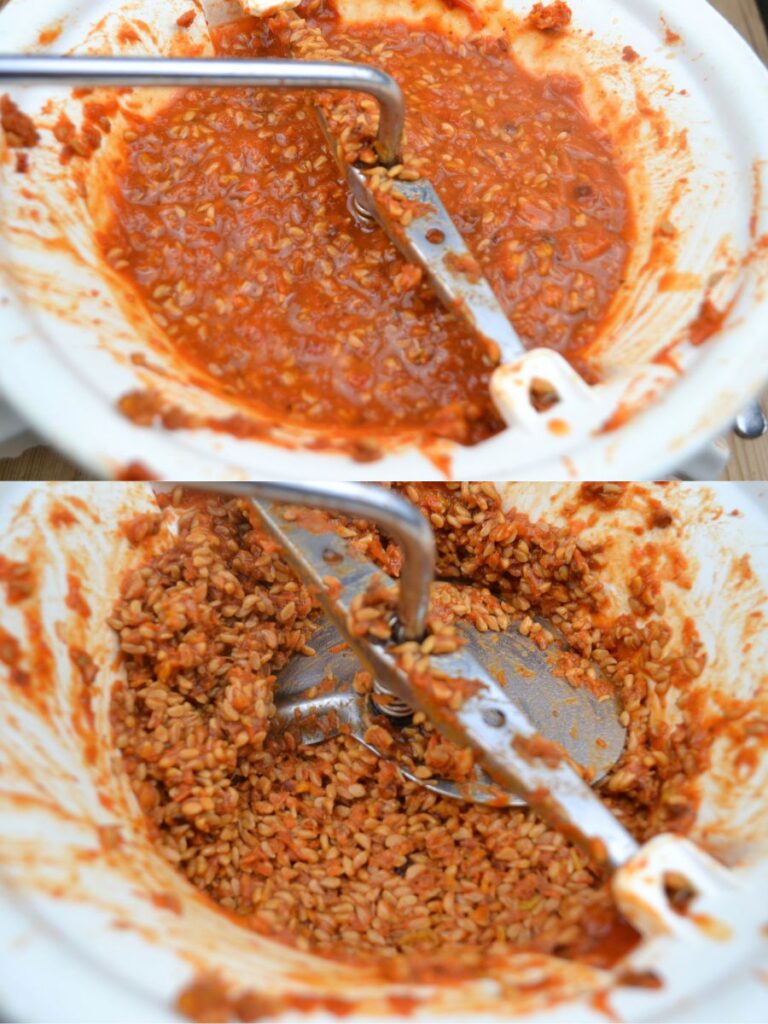
Pass it through the food mill again. After this, you can discard the seeds into the compost.
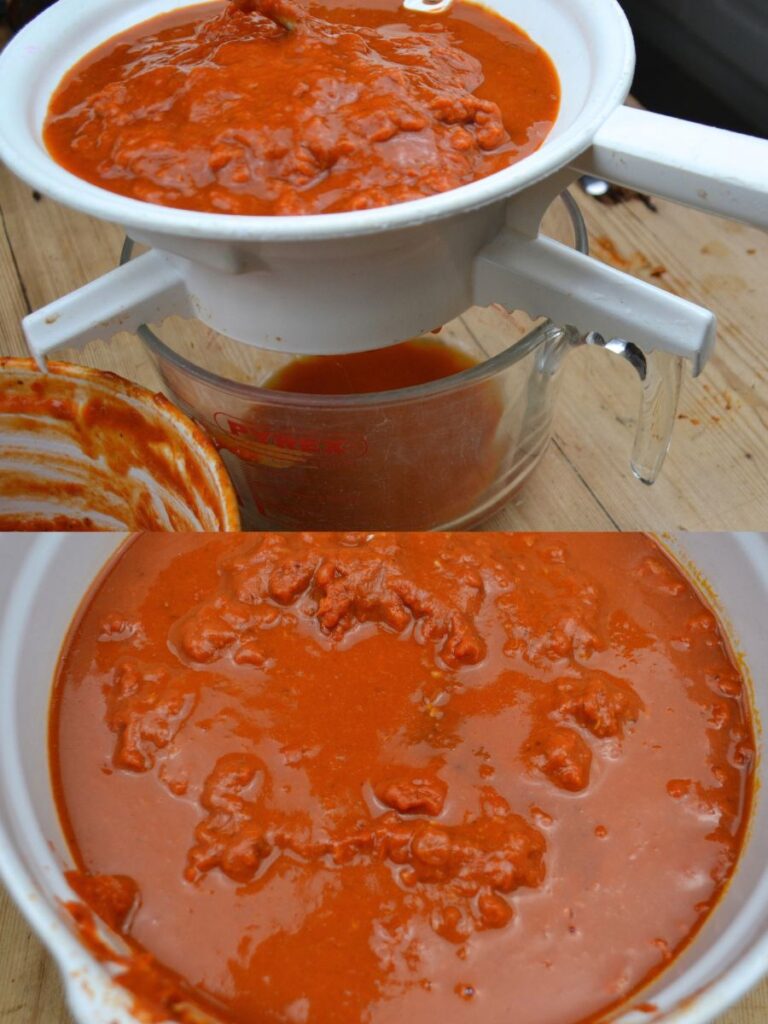
Pass the rosehip pulp through the smaller sifter in the food mill.
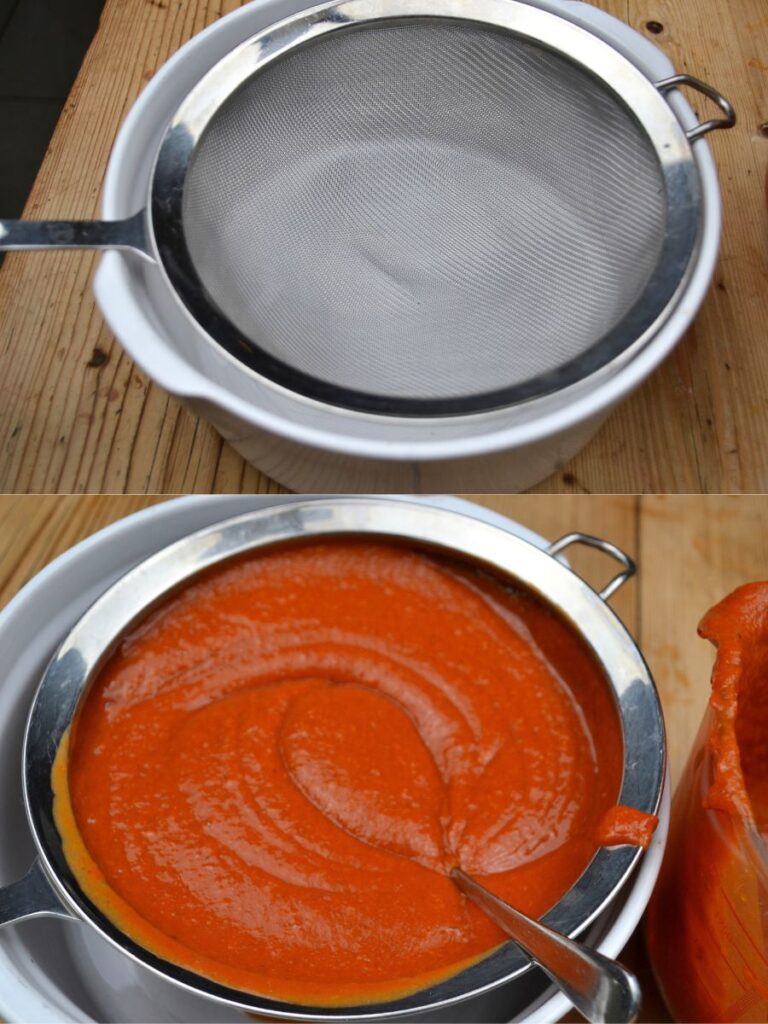
And then pass the rosehip pulp a third time! Through a thin sieve.
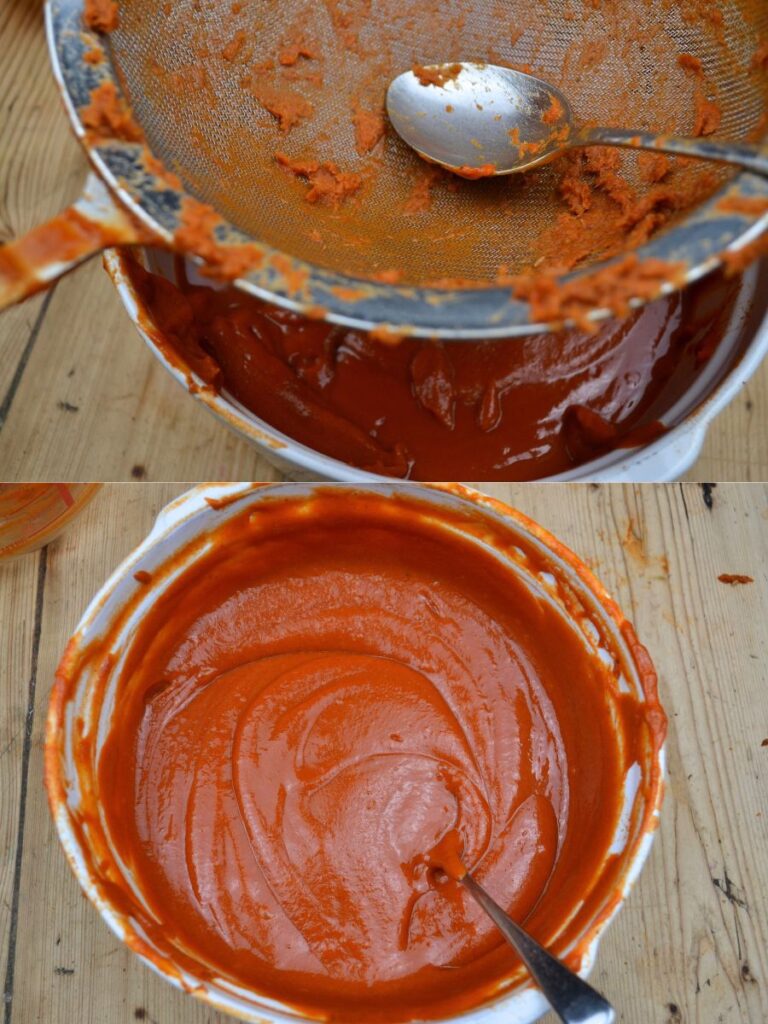
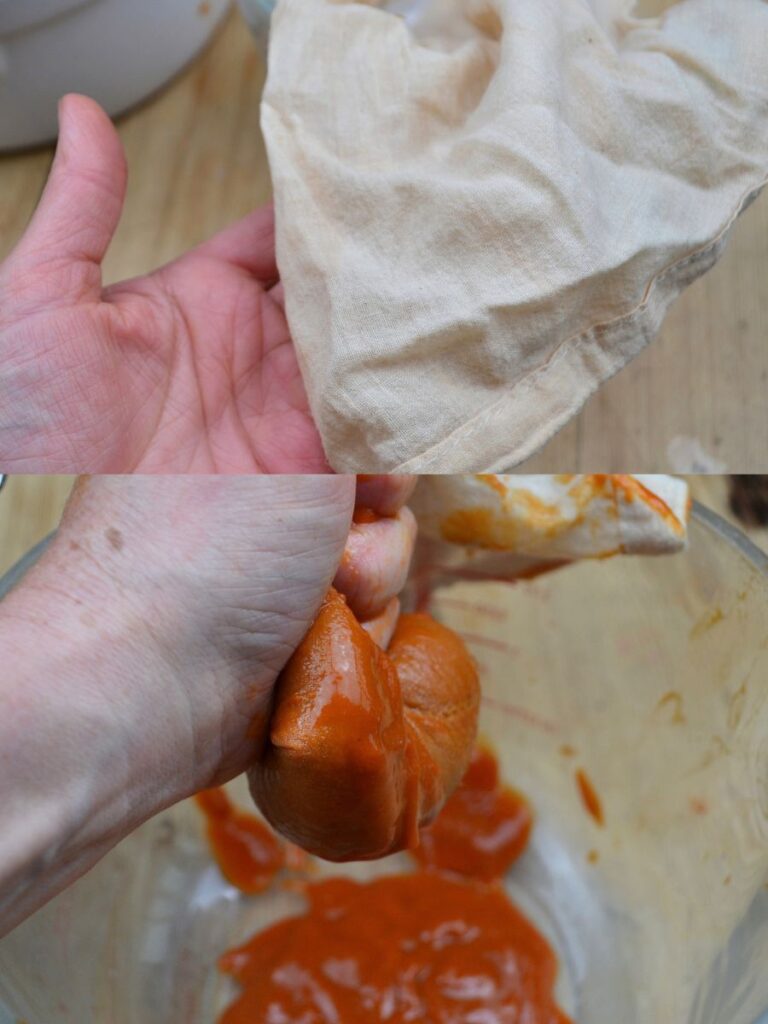
After the sieve, pass the rosehip pulp through cheesecloth or something similar to remove the rosehip’s tiny needles.
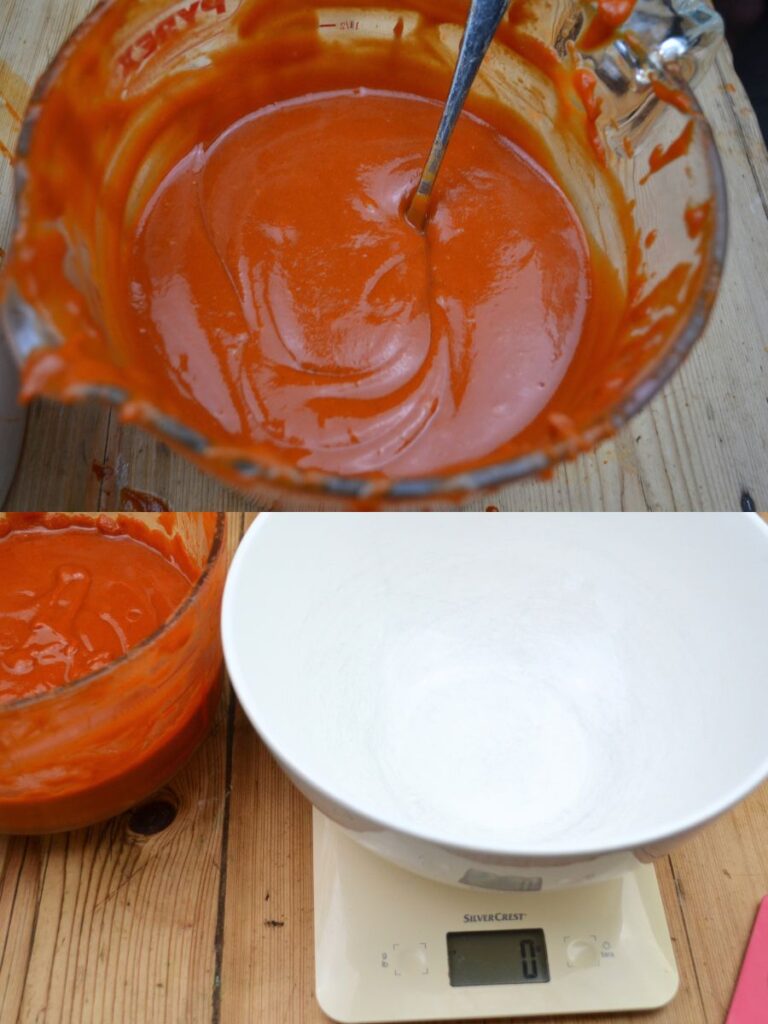
Once you finish the long process of turning the fruit into pulp, weigh it to calculate the amount of sugar.
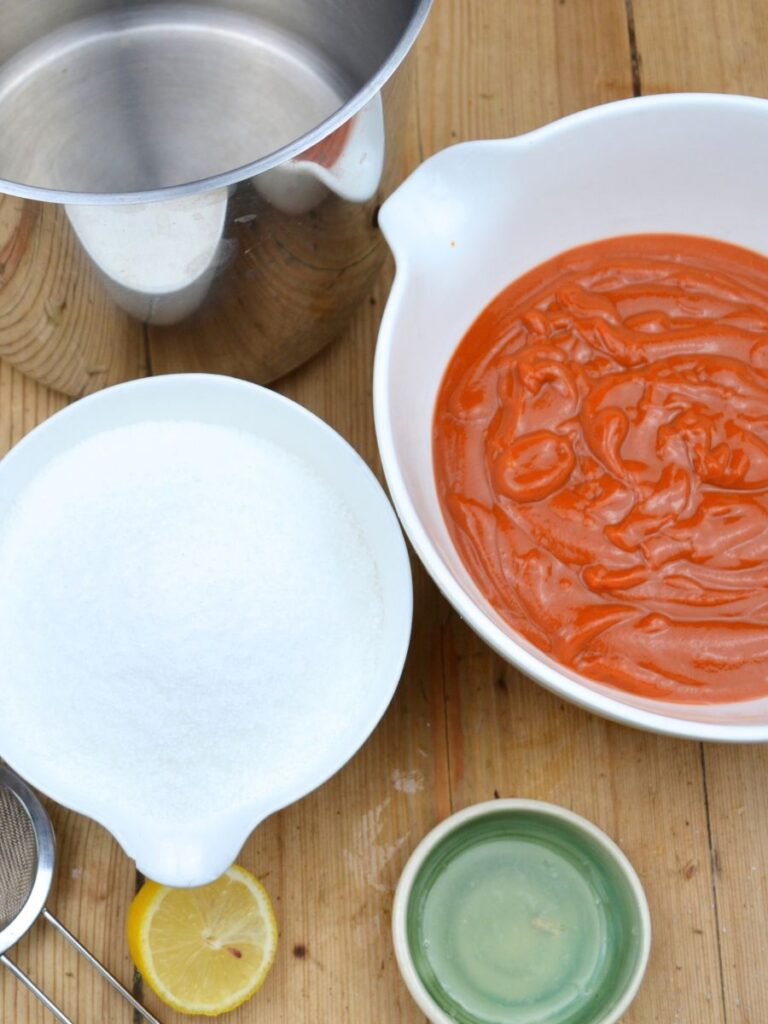
For every kilo of rosehip pulp, I add about 800 grams of sugar and the juice of half a lemon.
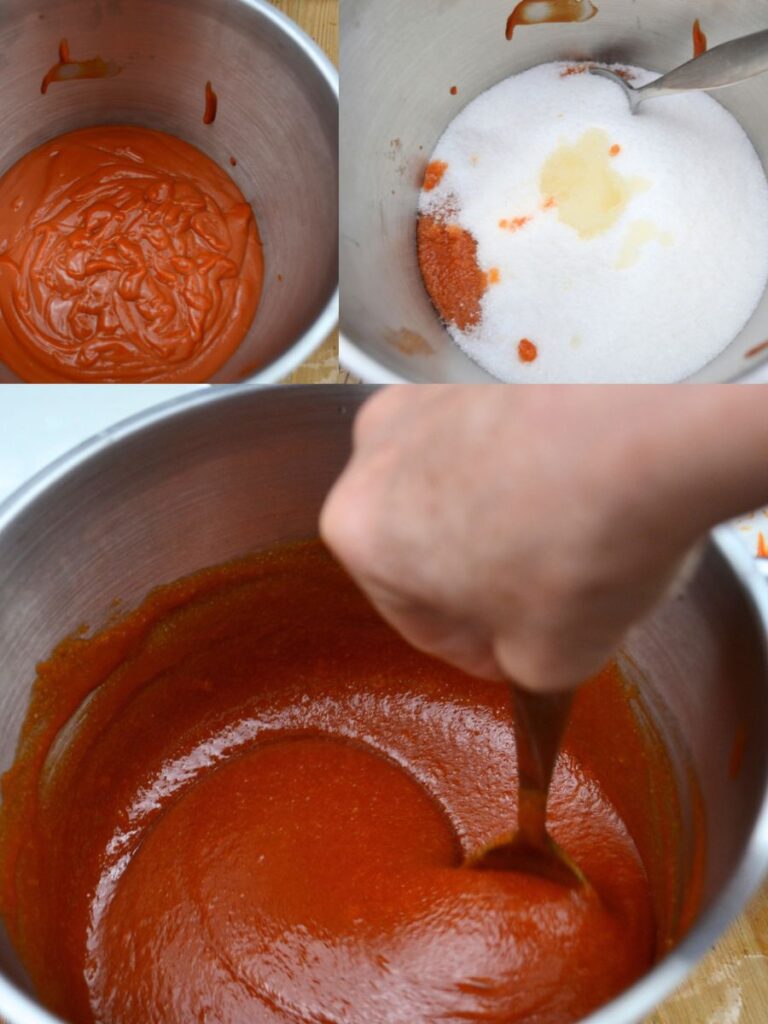
Cooking and jar the jam
Mix the pulp, sugar and lemon juice in a large pot, and bring to a boil. Stir constantly until the sugar is completely dissolved.
Reduce the heat to a simmer for about 1,30 to 2 hours, stirring to prevent burning.
While the jam cooks, sterilise the jars you’ll use. I sterilise them by rinsing them and putting them in a low oven for at least 10 minutes, or you can also boil the jars for 10 minutes.
I always prepare more jars than I need. For every kilo of fruit, I will use 4 or 5 350 g jam jars.
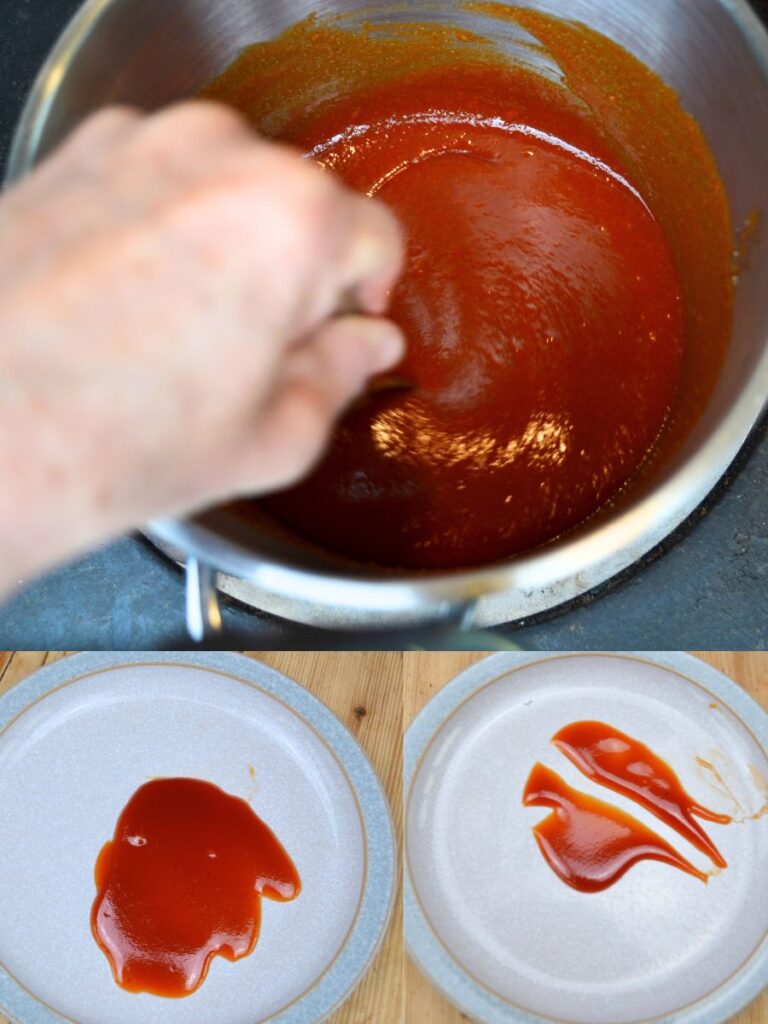
How to test if the jam is ready
Once it thickens, check if it is ready by pouring a spoonful of jam onto a cool plate; if you run a finger through the puddle and it doesn’t join together, it is ready.
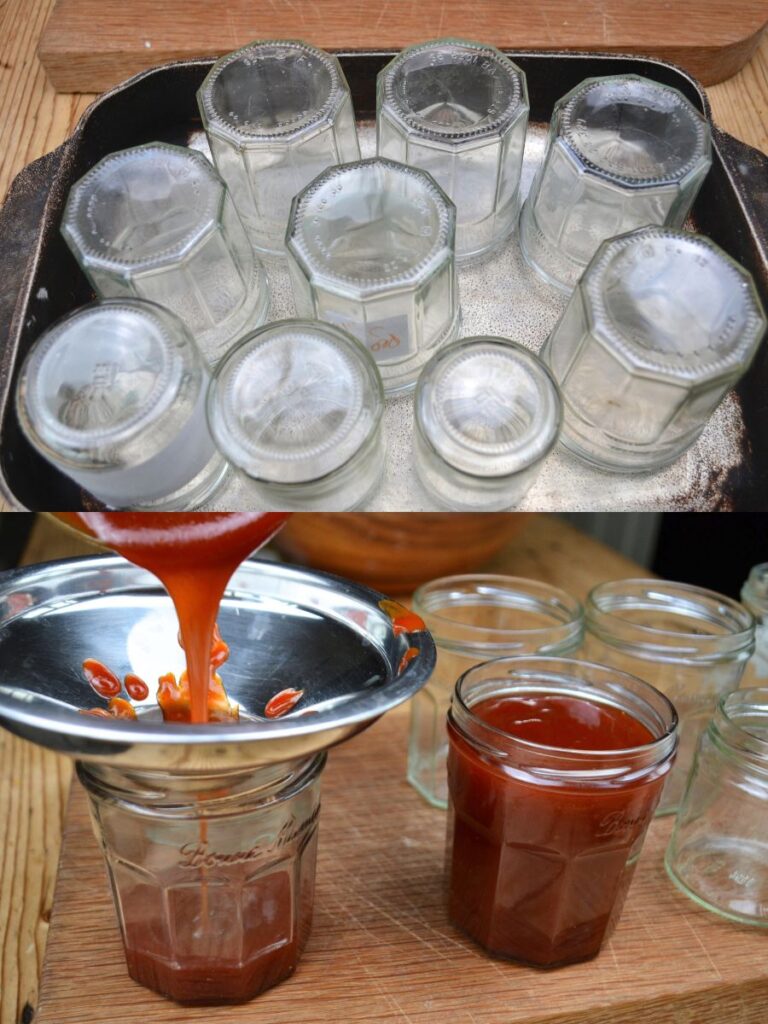
Once ready, sterilise your jars, then jar the rosehip jam while it is hot and seal them.
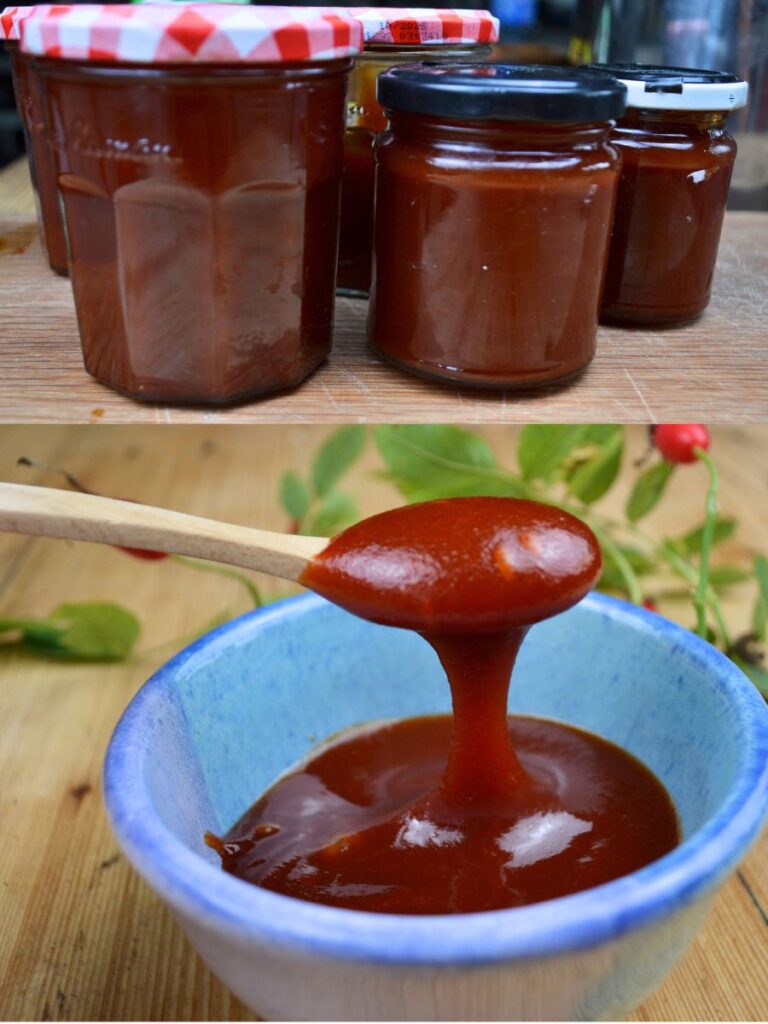
After days of hard work, relax and enjoy your delicious homemade rosehip jam! ❤️
Tips for Making Rosehip Jam
- Use ripe rosehips.
- Cook them until very soft.
- Don’t skip the straining stage.
- A food mill makes the process much easier.
- Use a wide saucepan for the final cooking.
- Stir regularly.
- Be patient—the process takes time!
- Make sure your jars are properly sterilised.
How to use rosehip jam
- Spread on homemade bread or sourdough
- Serve with porridge
- Add to yoghurt
- Spread on pancakes
- Use as a filling for cakes or biscuits
- Give small jars as homemade gifts
How to store rosehip jam
- Store the jam jars in dark cool place.
- Once open, keep in the fridge.
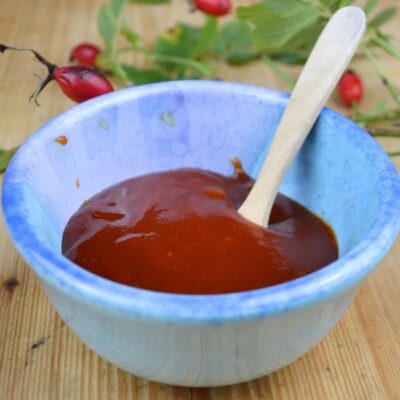
How to Make Rosehip Jam: Step-by-Step Recipe
Equipment
- food mill
- thin colander
- cheesecloth or similar.
- A medium saucepan
- A large saucepan
- Wooden spoon
- A small cool plate
- Sterilised jam jars
Ingredients
- 1 kg of Fresh rosehips
- Water to cook the rosehips
- 800 grams of Sugar
- 1/2 Lemon juice
Instructions
- Harvest and preparation:
- When picking rosehips, look for fruit that is bright red and ripe, not green or shrivelled.
- Clean the rosehips by cutting off the ends and stems with a knife, and discard any bad fruit.
- Put the rosehips in a big saucepan.
- Wash the fruit, then fill the saucepan with water to cover it.
- Cook for at least 1 hour, until the fruit is very soft.
- Try a fork or spoon against the side of the saucepan to check if they are soft; if they are hard, cook them a bit longer.
- Processing the fruit:
- If you are using a food mill, pass the fruit through the larger holes twice and the smaller holes once.
- Now the hard work begins! If you’re using one, prepare the food mill.
- Add a small amount of the fruit at a time; it is easier to work with smaller batches.
- Once you’ve finished passing all the fruit, put the leftovers (the seeds and peels) in a saucepan with some water and cook them. This helps you extract as much juice as possible.
- Pass it through the food mill again. After this, you can discard the seeds into the compost.
- Pass the rosehip pulp through the smaller sifter in the food mill.
- And then pass the rosehip pulp a third time! Through a thin sieve.
- After you pass the rosehip pulp through the sieve, pass the fruit through a cheesecloth or something similar to remove the rosehip's tiny needles.
- Once you finish the long process of turning the fruit into a smooth rosehip pulp, weigh it to calculate the sugar you need.
- For every kilo of rosehip pulp, I add about 800 grams of sugar and the juice of half a lemon.
- Cook and jar the jam:
- Mix the rosehip pulp, sugar and lemon juice in a large pot, and bring to a boil. Stir constantly until the sugar is completely dissolved.
- Reduce the heat to a simmer for about 1,30 to 2 hours, stirring to prevent burning.
- While the jam cooks, sterilise the jars you’ll use. I sterilise them by rinsing them and putting them in a low oven for at least 10 minutes, or you can also boil the jars for 10 minutes.
- I always prepare more jars than I need. For every kilo of fruit, I will use 4 or 5 350 g jam jars.
- How to test if the jam is ready
- Once it thickens, check if it is ready by pouring a spoonful of jam onto a cool saucer; if you run a finger through the puddle and it doesn't join together, it is ready.
- Once ready, sterilise your jars, then jar the rosehip jam while it is hot and seal them.
- After days of hard work, relax and enjoy your delicious homemade rosehip jam!
Notes
How to store rosehip jam Store the jam jars in a dark, cool place. Once open, keep in the fridge.