Foraged Wild Garlic and Stinging Nettle Pesto Recipe

Foraging your own ingredients is one of the simplest ways to connect with the seasons, and this stinging nettle and wild garlic pesto is a perfect place to start. Packed with fresh, vibrant flavour, this easy recipe transforms two common wild plants into a delicious, nutrient-rich spread that’s perfect for pasta, sandwiches, or drizzling over roasted vegetables. Don’t let the sting of nettles put you off—once prepared, they become wonderfully mild and earthy, pairing beautifully with the bold, garlicky punch of wild garlic for a truly unique homemade pesto.
Benefits of wild garlic and stinging nettles
Wild garlic (Allium ursinum) and stinging nettles (Urtica dioica) are both highly nutritious wild plants with a range of health benefits. Wild garlic supports heart health, boosts immunity, aids digestion, and has natural antibacterial and anti-inflammatory properties. Stinging nettles are rich in vitamins (a great source of vitamin A) and minerals like iron and calcium, and may help reduce inflammation, support joint and urinary health, ease allergy symptoms, and assist with blood sugar regulation. So there you have many reasons to consume stinging nettles and wild garlic!
Making the stinging nettle and wild garlic Pesto:
I love preparing seasonal food, and Spring is the time of year when we make lots of these wild food recipes. Wild garlic comes in early spring, and stinging nettles are at their most tender, nutrient-dense, and flavorful before flowering.
The traditional way to make pesto is with a mortar & pestle, but you can also use a food processor for a smoother texture; either method takes little time to prepare.
Ingredients:

- Young nettle leaves, about 70 grams.
- Wild garlic leaves, about 70 grams
- 2 or 3 chopped garlic cloves
- 2 generous handfuls of walnuts, or pine nuts, about 50 grams.
- 20 g Parmesan cheese or any hard cheese you like.
- 2 or 3 tbls of extra virgin olive oil
- A generous pinch of salt
- 2 tbsp of lemon juice
- A generous twist of black pepper
How to make the pesto:
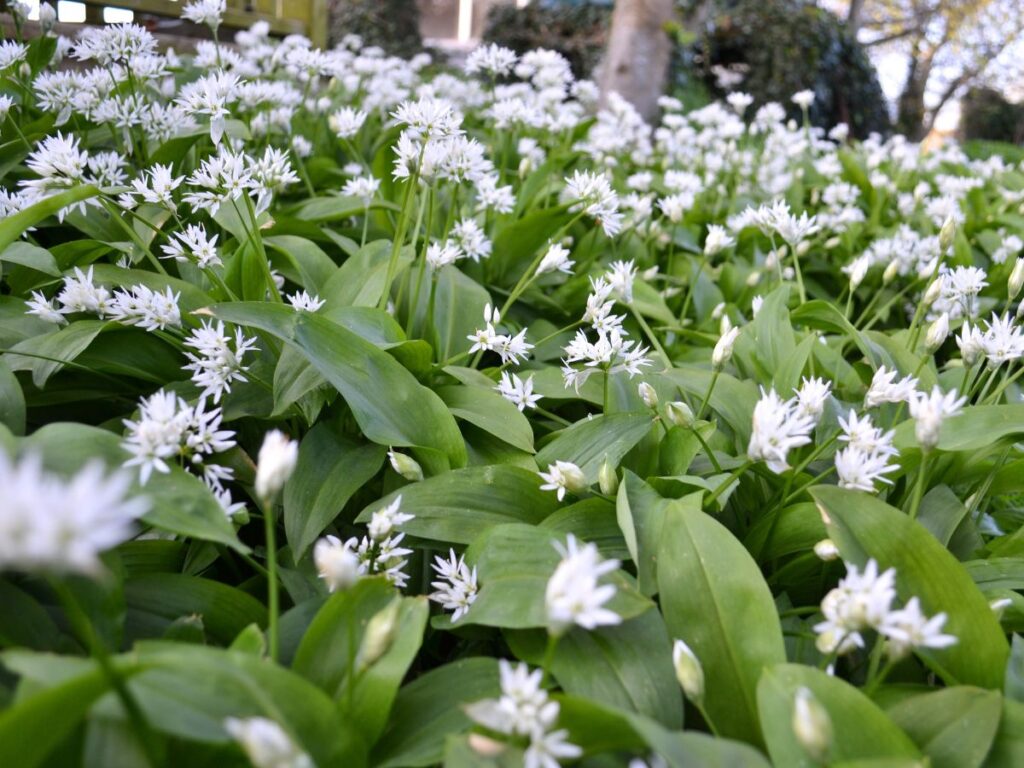


The first thing you do is clean the fresh wild garlic and stinging nettles. For this one, make sure to wear gloves! Remove the leaves from the stems, leaving the nice leaves for the pesto.

Wash the wild garlic and nettles in cold water. Wear gloves!
Once clean, blanch the nettle leaves in a large pan of boiling water or vegetable stock, and simmer for 5 minutes.
The Stinging nettles will no longer sting after blanching.
Strain the stinging nettles. You can keep this water and use it as fertiliser for your plants, as it will have a high nitrogen content.

Toast the nuts in a shallow frying pan or in the oven until lightly golden.
If using a mortar and pestle, start by crushing the nuts.
Then add wild garlic, and pound to form a rough paste.
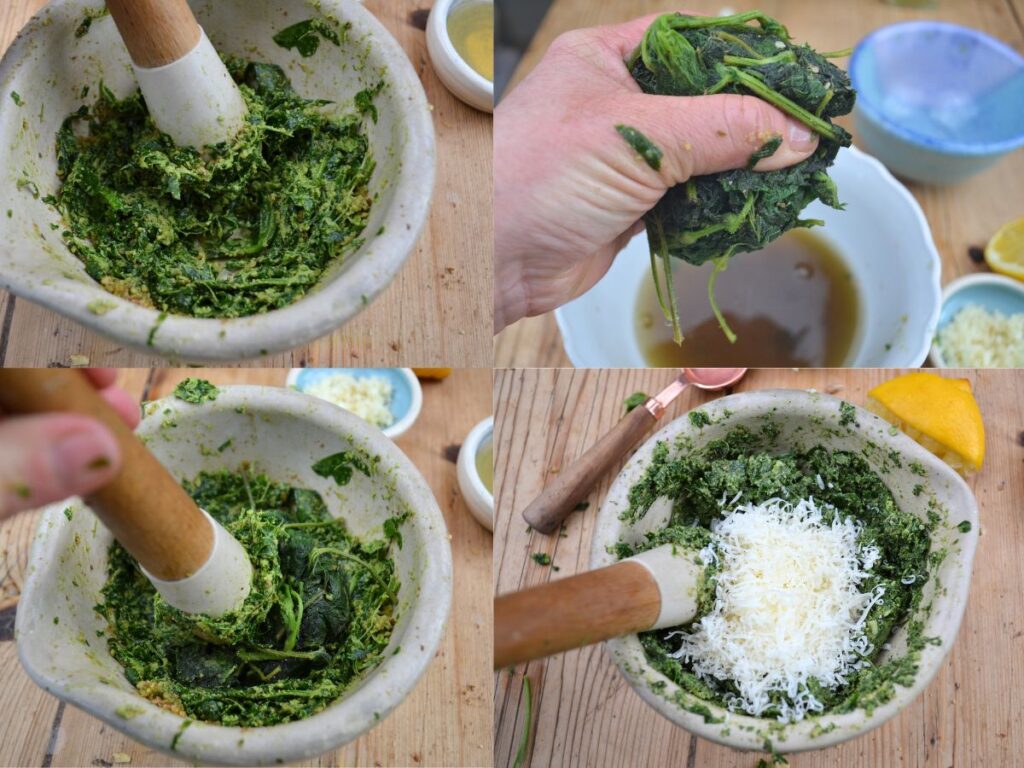
Squeeze the blanched nettles to remove excess water, then add them. And keep pounding.
Then add the garlic, lemon juice, and cheese if using, salt and pepper.
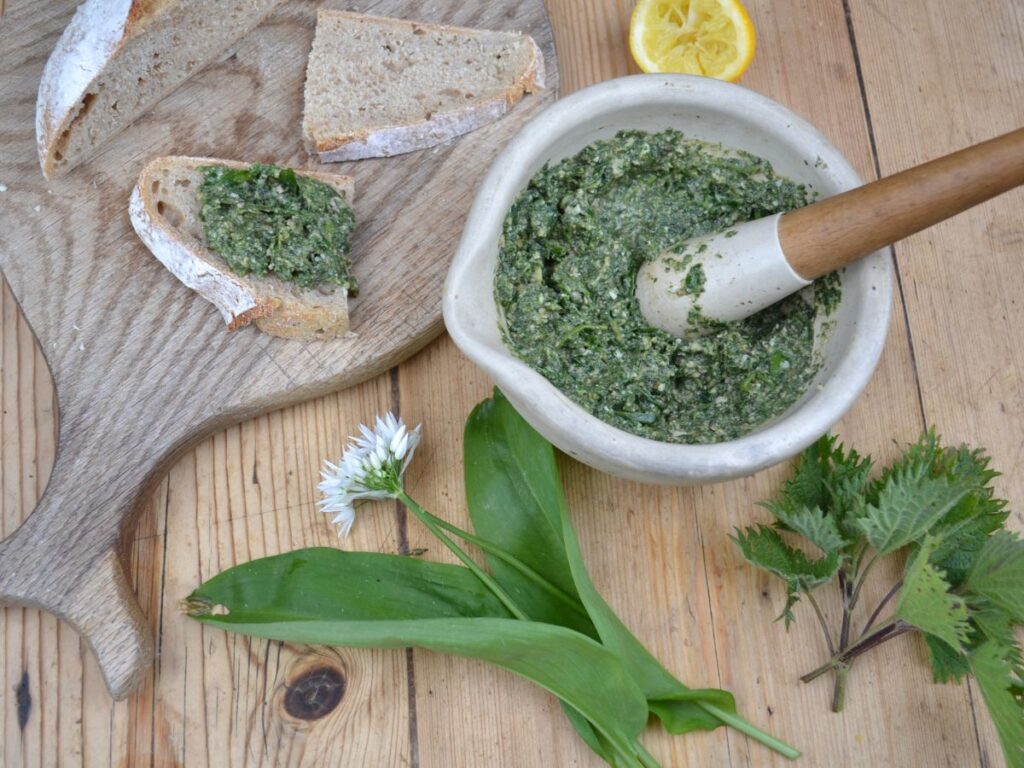
Pound for a couple of minutes until you get the desired texture.
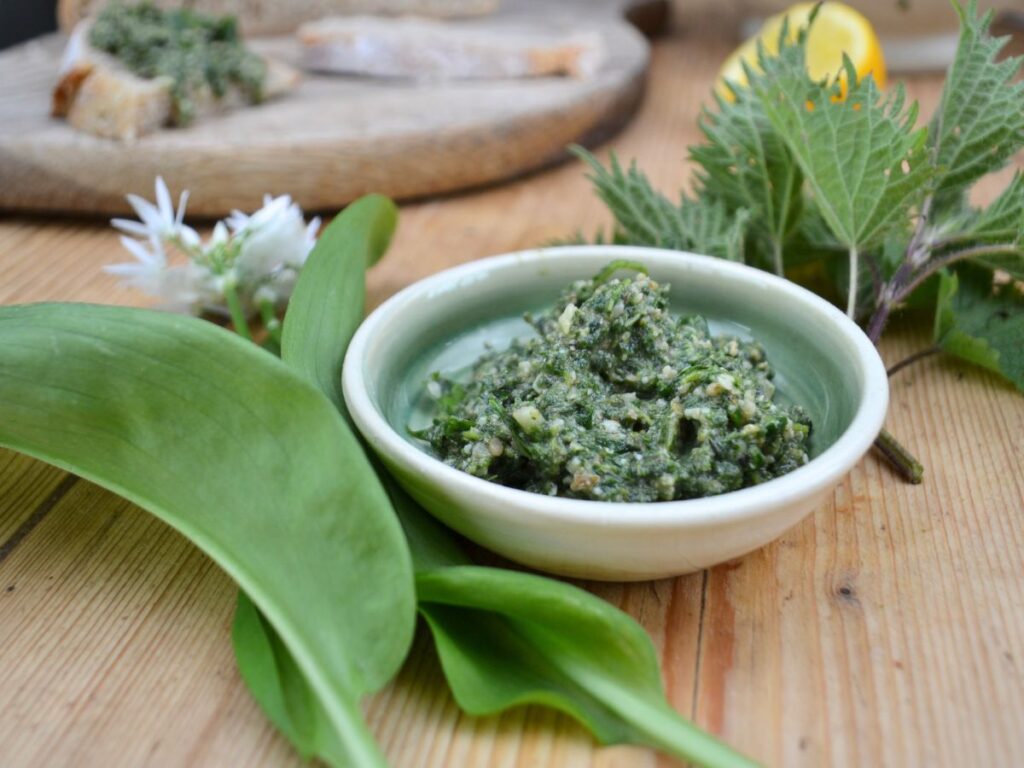
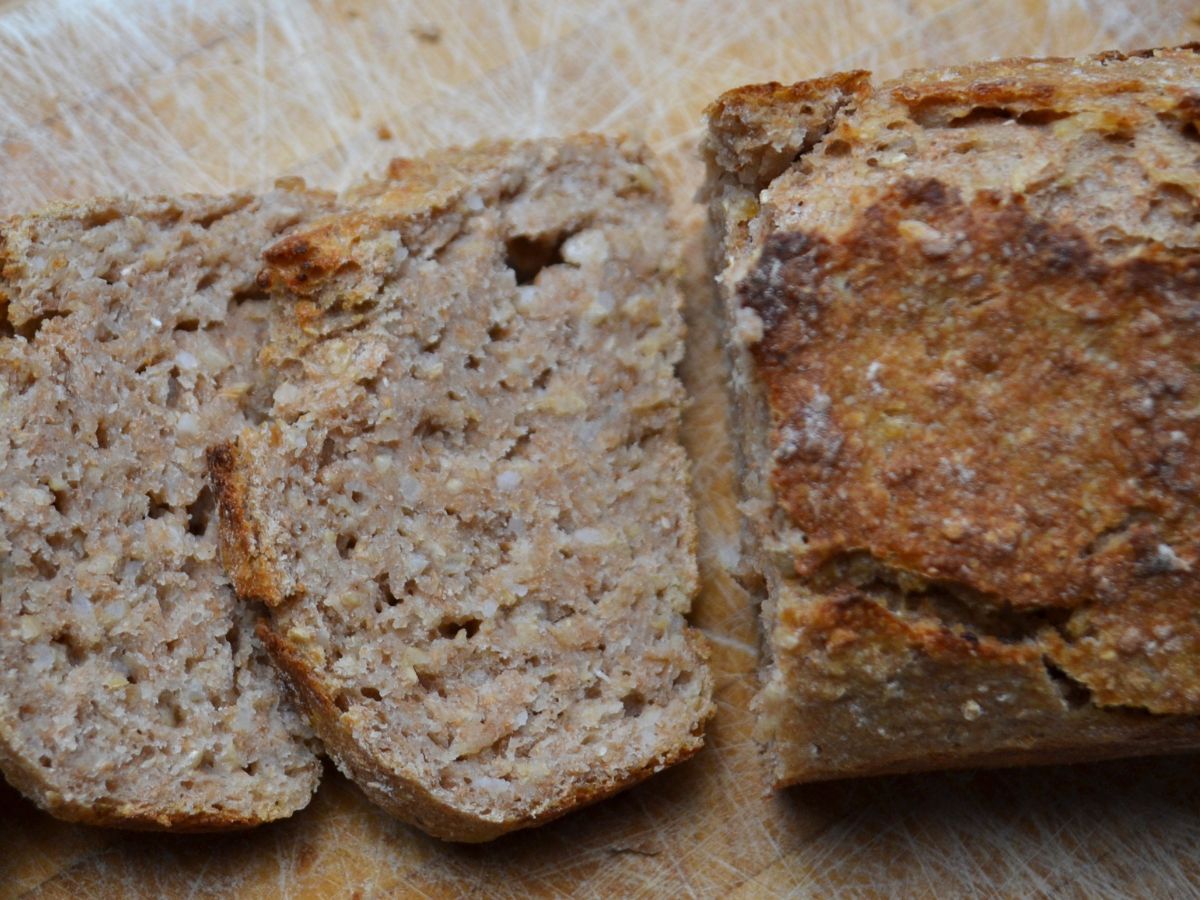
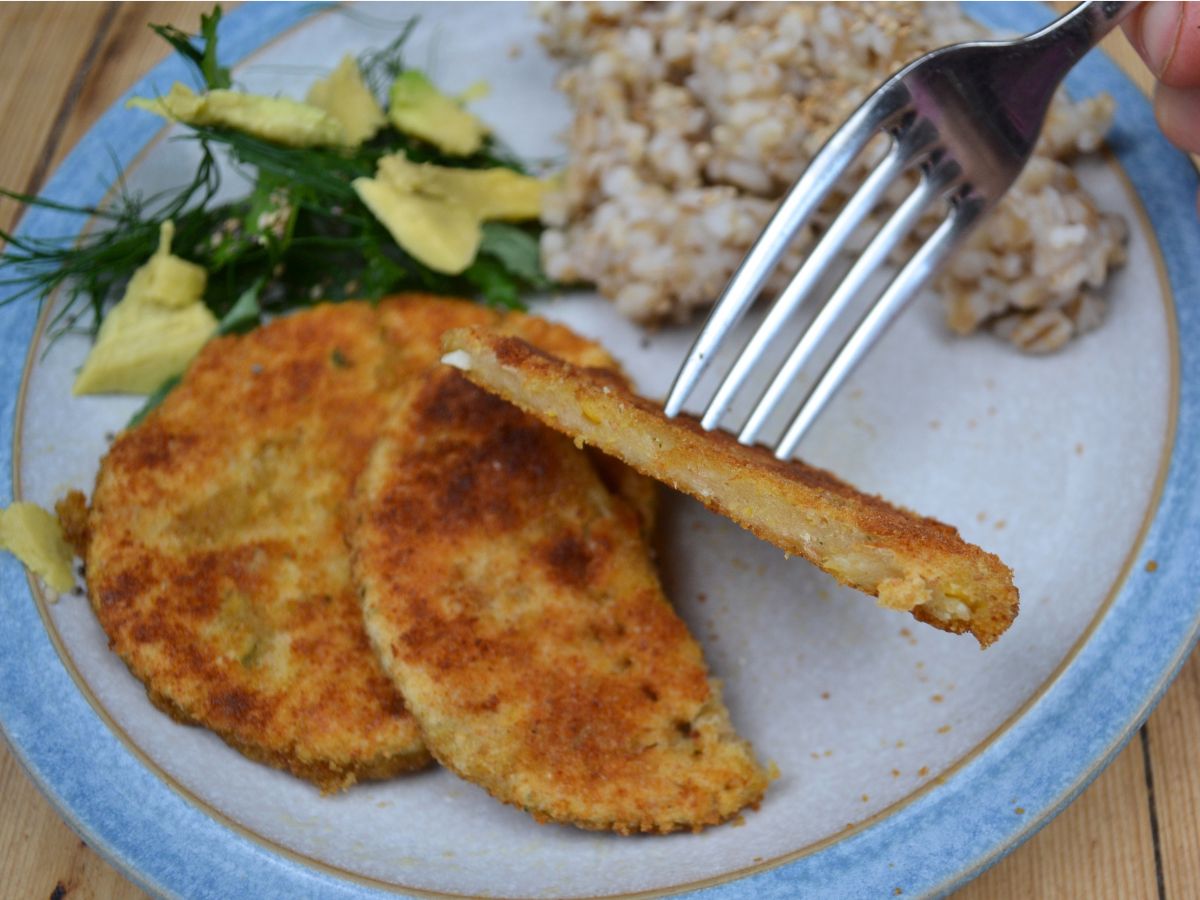
Enjoy the pesto in fresh pasta, homemade bread and flatbreads.


Tips:
To store keep in air-tight glass jars for a couple of weeks
To make this pesto vegan, omit the cheese or use miso paste instead.
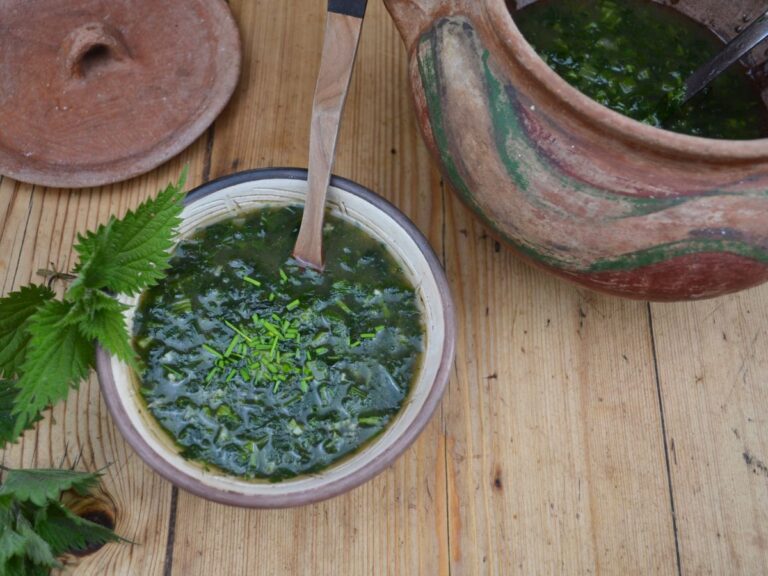
Other Stinging Nettles Recipes:

Foraged Wild Garlic and Stinging Nettle Pesto Recipe
Equipment
- A mortar and pestle or a food processor
- a saucepan
- colander
Ingredients
- Young nettle leaves about 70 grams.
- Wild garlic leaves about 70 grams
- 2 0 3 garlic cloves
- A generous handful of nuts or pine nuts, about 50 grams.
- 20 g Parmesan cheese or any cheese you like.
- 2 or 3 tbls of extra virgin olive oil
- A generous pinch of salt
- 2 tbs of lemon juice
- A generous twist of black pepper
- 200 ml stock optional
Instructions
- The first thing you do is clean the fresh wild garlic and stinging nettles. For this one, make sure to wear gloves! Remove the leaves from the stems, leaving the nice leaves for the pesto.
- Wash the wild garlic and nettles in cold water. Wear gloves!
- Once clean, put the nettle leaves in a large pan of boiling water, or vegetable stock if using, and simmer for 5 minutes.
- Strain the stinging nettles. You can keep this water and use it as a stock.
- Toast the nuts in a shallow frying pan or in the oven until lightly golden.
- If using a mortar and pestle, start by crushing the nuts.
- Then add wild garlic, and pound to form a rough paste.
- Squeeze the cooked nettles to get rid of the excess water, then add the stinging nettles. And keep ponding.
- Then add the garlic, lemon juice, and cheese if using, salt and pepper.
- Pound for a couple of minutes until you get the desired texture.
- Enjoy the pesto in fresh pasta, homemade bread and flatbreads.